Thailand Nomad Visa
Thailand's Destination Thailand Visa (DTV) is a five-year multiple-entry visa for remote workers and freelancers with at least 500,000 baht in savings, allowing stays of up to 180 days per entry (extendable once by 180 days) for a 10,000 baht fee.
Last checked 25 October 2026
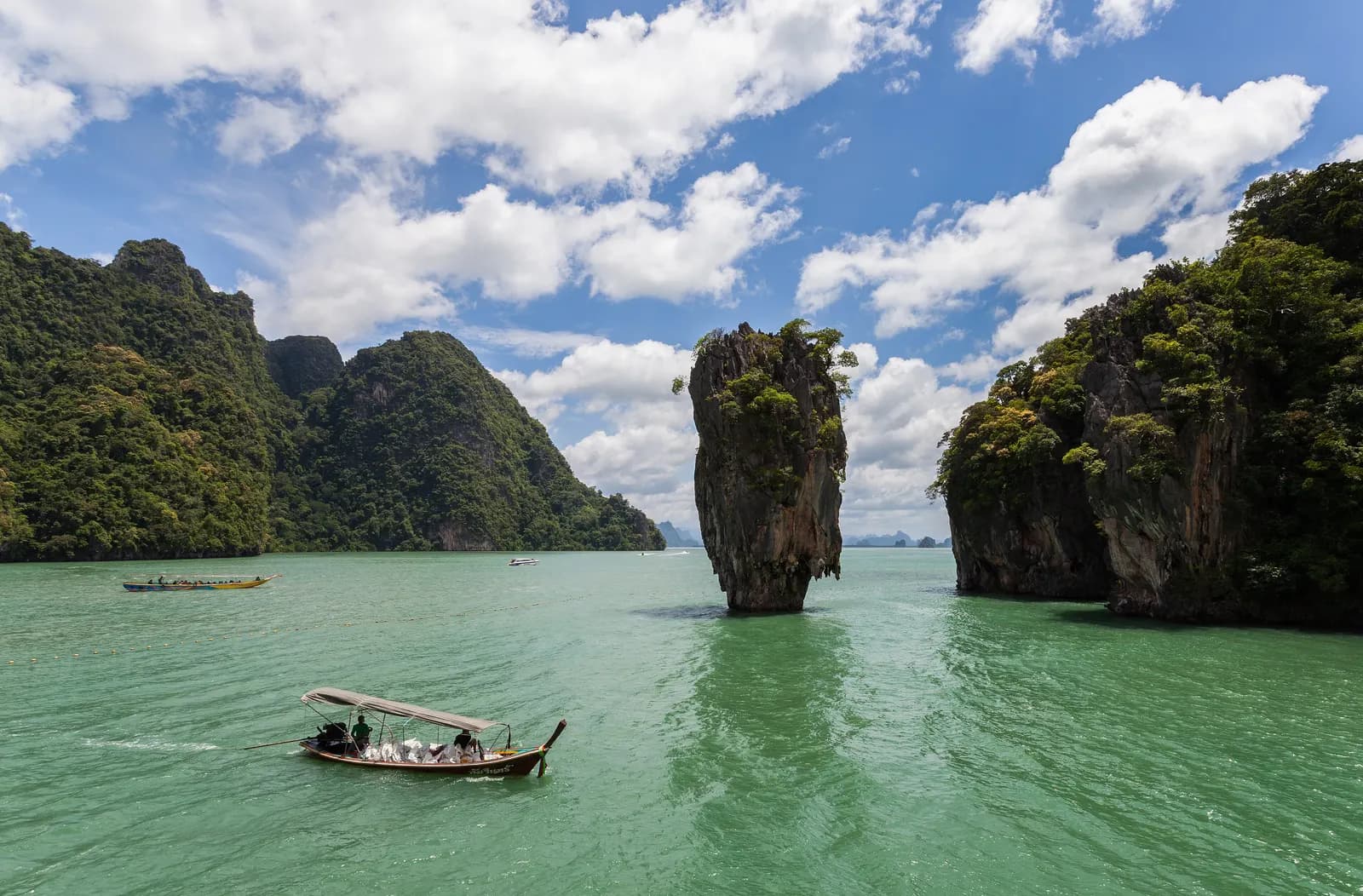
Photo: Diego Delso, CC BY-SA 3.0, via Wikimedia Commons
Thailand nomad visa at a glance
- Official name
- Destination Thailand Visa (DTV)
- Income needed
- No income threshold; savings of at least 500,000 THB (or equivalent), shown with bank statements or a sponsorship letter
- How long
- 5-year multiple-entry visa; up to 180 days per entry, extendable once by up to 180 days
- Fees
- 10,000 THB (MFA figure); each embassy charges its local equivalent
- Processing time
- About 15 business days at the Royal Thai Embassy, Abuja; some cases 4-6 weeks
- Family
- Yes: spouse and children under 20
- Tax
- Tax resident after more than 180 days in a calendar year; foreign income brought into Thailand is taxable
- Where to apply
- Online at thaievisa.go.th, under the Royal Thai Embassy in Abuja
- Nigerian passport
- Nigerians need a visa for Thailand and apply online at thaievisa.go.th, under the Royal Thai Embassy in Abuja. The embassy lists NDLEA visa clearance and a POSSAP police clearance as mandatory for Nigerian passport holders.
Rules change; confirm with the official site before you apply: Thai e-Visa portal, Ministry of Foreign Affairs of Thailand.
What is the Thailand digital nomad visa?
Thailand's remote work visa is the Destination Thailand Visa (DTV), introduced in July 2024. It is a five-year, multiple-entry visa for remote workers, freelancers and people taking part in Thai cultural activities, with stays of up to 180 days each time you enter.
The DTV is not a work permit. The Ministry of Foreign Affairs' checklist asks remote workers for an employment contract or certificate from their own country, or a portfolio showing freelance work, so it fits people paid by employers and clients abroad. A job with a Thai company needs a separate visa and work permit.
Who can apply for the Thailand digital nomad visa?
The Ministry of Foreign Affairs lists three groups of eligible foreigners:
- Digital nomads, remote workers, foreign talent and freelancers (the "workcation" category).
- People joining Thai soft power activities such as Muay Thai, Thai cooking courses, sports training, medical treatment, seminars and music festivals.
- The spouse and children under 20 of a DTV holder.
Since 31 August 2026 every DTV applicant must also show proof of permanent residence in the country where they apply and a criminal record clearance certificate, according to the Department of Consular Affairs. In practice, a Nigerian living in Nigeria applies under the Thai embassy in Abuja.
How much income do you need for the Thailand digital nomad visa?
There is no monthly income threshold. Instead, you must show at least 500,000 baht, or the equivalent in another currency, as financial evidence.
The Ministry of Foreign Affairs accepts bank statements (its embassy checklists ask for the last three months, showing the minimum balance), payslips or a sponsorship letter. Embassies can ask for more, so keep the balance steady for several months before you apply rather than moving money in at the last minute.
How long can you stay, and can you renew it?
The visa is valid for five years with multiple entries, and each entry allows up to 180 days. You can extend a stay once, by up to 180 days, through the Thai Immigration Bureau inside Thailand.
After 180 days plus the extension, you must leave Thailand and re-enter on the same visa while it is still valid.
How much does it cost?
The Ministry of Foreign Affairs sets the DTV fee at 10,000 baht. Each embassy collects it in local currency, so the amount you pay through the e-Visa system may not match 10,000 baht exactly. The fee is not refunded if the visa is refused.
Extensions inside Thailand are handled by the Immigration Bureau and carry their own fee, which is not on the Ministry's DTV pages.
What documents do you need?
For the remote work category, the Ministry of Foreign Affairs and its embassies list:
- Passport or travel document (biodata page), valid for at least six months.
- A photo taken within the last six months.
- Proof of permanent residence in the country where you apply (required from 31 August 2026).
- Financial evidence of at least 500,000 baht.
- An employment contract or employment certificate, or a professional portfolio showing remote or freelance work.
- A criminal record clearance certificate from your country of nationality or the country where you apply (required from 31 August 2026).
For Nigerian passport holders, the Royal Thai Embassy in Abuja's e-Visa checklist adds two mandatory items: an NDLEA visa clearance and a police clearance issued by POSSAP.
How do you apply from Nigeria?
You apply online through the Thai e-Visa portal and choose the Royal Thai Embassy in Abuja as the processing mission. You do not post your passport.
- Confirm your remote work. You need a contract, employment certificate or freelance portfolio from clients outside Thailand. Our remote jobs board lists roles with foreign employers.
- Build up and hold at least 500,000 baht (or the equivalent) in your account, and download recent statements.
- Get your NDLEA visa clearance and a POSSAP police clearance. Ask the embassy whether the POSSAP clearance also covers the DTV's criminal record certificate.
- Prepare proof that you live permanently in Nigeria; the embassy decides which documents it accepts, so check with Abuja if unsure.
- Create an account at thaievisa.go.th, choose the DTV, upload everything and pay the fee online. You cannot edit the application after you submit it.
- When the e-Visa is approved, complete the Thailand Digital Arrival Card (TDAC) before you fly.
For help assembling the file, our Premium membership includes nomad visa assistance.
How long does processing take?
The Royal Thai Embassy in Abuja says e-Visa processing takes 15 business days, and some cases take four to six weeks. It advises applying well before your travel date. The embassy can also ask for an interview or extra documents.
Do you pay tax in Thailand on a digital nomad visa?
Possibly, if you stay long enough. Thailand's Revenue Department treats anyone who spends more than 180 days in Thailand in a calendar year as a tax resident.
Residents are taxed on Thai-source income and on the portion of foreign income they bring into Thailand. A DTV holder who spends a full 180 days plus an extension in one calendar year, and transfers foreign earnings into Thailand, should expect Thai tax questions. This is general information, not tax advice.
Can you bring your family?
Yes. A spouse and children under 20 can apply for their own DTV as dependants. Each needs a passport, photo, the 500,000 baht financial evidence (or a sponsorship letter), a copy of the main holder's DTV, proof of the relationship such as a marriage or birth certificate, and a criminal record certificate.
What to know before you move
- Working hours: Thailand is on UTC+7, six hours ahead of Lagos (WAT, UTC+1). A 2pm meeting in Lagos is 8pm in Bangkok, so European clients are easier than American ones.
- Not a work permit: keep your work for employers and clients outside Thailand.
- Getting paid: because foreign income brought into Thailand can be taxed once you are resident, think about how and when you transfer money.
- Health insurance: the Ministry's DTV list does not require it, but you will be paying for any treatment, so arrange cover before you travel.
- Planning stays: count your days. 180 days per entry, one extension, then you must leave and re-enter.
If you want a residence visa rather than a long-stay visa, compare Sri Lanka and Dubai.
Official source
Thai e-Visa portal, Ministry of Foreign Affairs of Thailand. We last checked this page against it on 25 October 2026. Visa rules, fees and income thresholds change, sometimes without notice. Confirm every figure with the official site before you apply or pay.
Thailand nomad visa: common questions
Can Nigerians apply for the Thailand digital nomad visa (DTV)?
How much money do I need for Thailand's DTV?
How long can I stay in Thailand on the DTV?
How much is the DTV fee?
Can I work for a Thai company on the DTV?
What changed for DTV applications in 2026?
Will I pay tax in Thailand on my remote salary?
Other nomad visas in Asia
All countries No route for Nigerian passports
Asia
Indonesia Nomad Visa
- Income
- US$60,000 a year, plus a personal bank balance of at least US$2,000 over the last 3 months
- Stay
- Up to 1 year
Asia
Sri Lanka Nomad Visa
- Income
- US$2,000 a month remitted to Sri Lanka, plus US$500 a month for each dependant beyond two
- Stay
- 1 year, renewable annually
 Not open to Nigerian passports
Asia
Taiwan Nomad Visa
- Income
- US$40,000 a year (age 30+) or US$20,000 (age 20-29) in one of the last two years, or another country's nomad visa; plus a US$10,000 average monthly bank balance over six months
- Stay
- Up to 2 years in total under the 2025 law change (NDC); check BOCA for the current initial stay